Services
Mobile App Development (React Native)
Cross-platform mobile applications with native performance for iOS and Android using React Native and Expo.
I develop cross-platform mobile applications using React Native that deliver native-quality experiences on both iOS and Android from a single codebase. My mobile development expertise spans healthcare patient apps, remote monitoring tools, clinical workflow applications, and consumer-facing products. I leverage the shared JavaScript and TypeScript ecosystem between web and mobile to maximize code reuse and team efficiency. From offline-first architectures for clinical field work to real-time data synchronization for remote patient monitoring, I build mobile applications that feel native, perform well, and integrate seamlessly with backend systems and device capabilities.
Schedule a Consultation10+
Mobile Apps Shipped
4.6+
Combined App Store Rating
~60%
Code Shared with Web
What I Deliver
Cross-Platform Development
I build mobile apps using React Native that run on both iOS and Android with a shared codebase, reducing development time and cost while maintaining platform-specific look and feel where it matters.
Offline-First Architecture
I implement offline-capable mobile apps using local storage, background sync, and conflict resolution strategies that ensure your app works reliably in low-connectivity environments like rural clinics.
Device & Sensor Integration
I integrate with device capabilities including camera, GPS, Bluetooth Low Energy for medical devices, biometric authentication (Face ID, fingerprint), and health data platforms like Apple HealthKit.
Performance Optimization
I optimize React Native applications for smooth 60fps animations, minimal memory usage, fast startup times, and efficient list rendering using techniques like virtualization and native driver animations.
Secure Data Handling
I implement secure data storage using encrypted key stores, certificate pinning for API communication, biometric-gated access to sensitive data, and secure session management for healthcare mobile apps.
OTA Updates & App Store Management
I configure over-the-air update capabilities using Expo Updates or CodePush for rapid iteration, and manage the App Store and Google Play submission processes including compliance with health app guidelines.
Why Work With Me
Shared Codebase with Web
Using React Native alongside a React web application enables significant code sharing for business logic, API clients, state management, and type definitions, reducing total development effort.
Reach Both Platforms
A single React Native codebase delivers your app to both iOS and Android users simultaneously, doubling your market reach without doubling your development budget.
Faster Iteration Cycles
React Native hot reloading during development and over-the-air updates in production enable faster feature delivery and bug fixes compared to fully native development approaches.
Related Case Studies
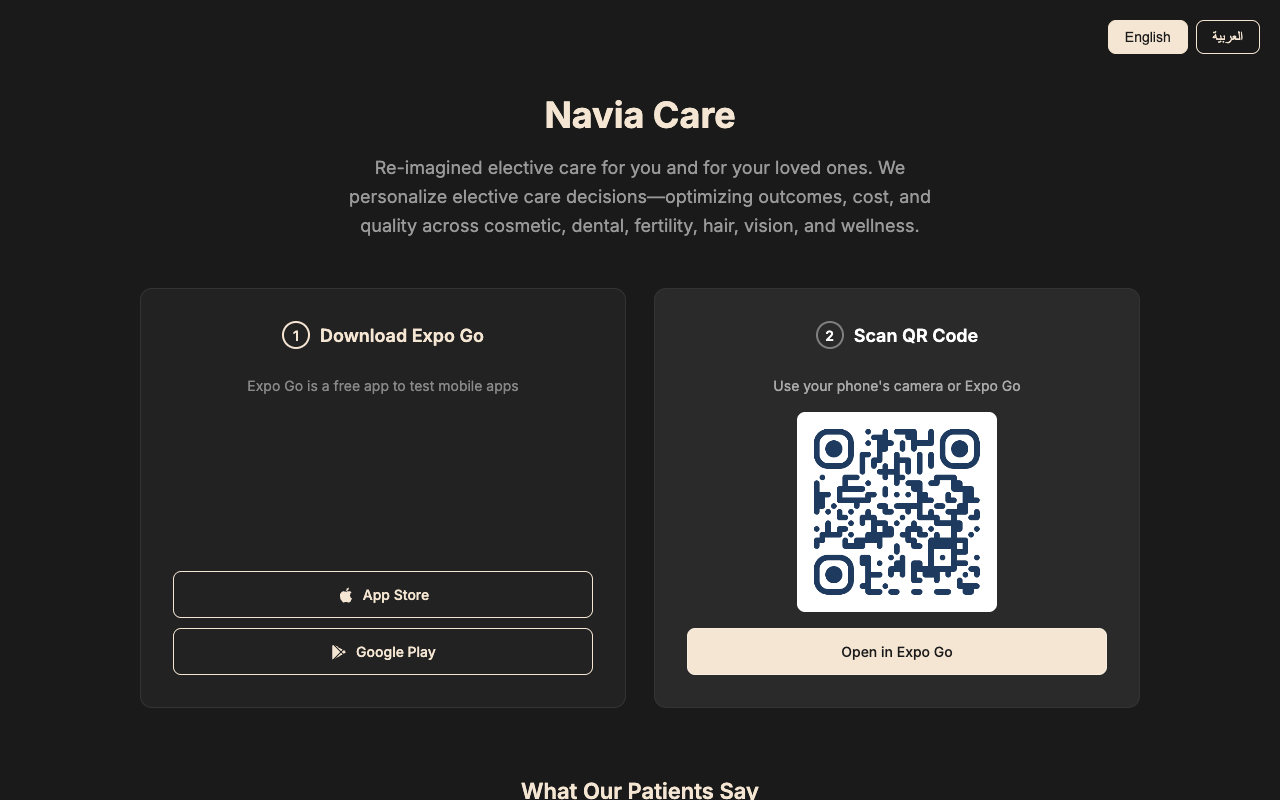
Related reading and services
Frequently Asked Questions
Why React Native instead of native iOS and Android development?
React Native provides near-native performance with a single codebase that works on both platforms. This means one development team, one set of business logic, and faster feature delivery. For most application types, the performance difference between React Native and fully native apps is imperceptible to users. React Native also allows significant code sharing with React web applications, which is a major advantage for organizations that need both web and mobile products.
Can React Native apps meet healthcare security requirements?
Yes. React Native provides access to all the same native security capabilities as fully native apps. I implement encrypted storage using the device keychain and keystore, biometric authentication via Face ID and fingerprint, certificate pinning for API communication, and jailbreak/root detection. React Native healthcare apps can fully comply with HIPAA technical safeguards and app store health category requirements.
Do you use Expo or bare React Native?
I primarily use Expo for new projects because it provides a superior developer experience with managed builds, over-the-air updates, and a curated set of well-maintained native modules. Expo has evolved significantly and now supports most native module needs through its config plugin system. For cases requiring custom native modules that Expo does not support, I use the Expo Development Client or bare React Native workflow as needed.
How do you handle app store submissions for healthcare apps?
I manage the full app store submission process for both Apple App Store and Google Play. Healthcare apps have additional review considerations including privacy policy requirements, health data handling disclosures, and in some cases medical device categorization. I prepare the necessary metadata, screenshots, privacy disclosures, and compliance documentation to ensure smooth approval. I also configure appropriate age ratings and content classifications.
Can you integrate with Bluetooth medical devices?
Yes. I have experience integrating React Native apps with Bluetooth Low Energy medical devices including blood pressure monitors, glucometers, pulse oximeters, and weight scales. I use the react-native-ble-plx library for BLE communication and implement proper device discovery, pairing, data parsing, and error handling. For standardized health devices, I follow the Bluetooth Health Device Profile specifications.
What about push notifications and real-time features?
I implement push notifications using Firebase Cloud Messaging for both platforms, with proper handling of notification permissions, foreground and background delivery, and deep linking from notification taps. For real-time features like chat or live data updates, I use WebSocket connections or Firebase Realtime Database depending on the use case. All real-time features include proper offline handling and reconnection logic.
Need a Mobile App for iOS and Android?
I build cross-platform mobile applications using React Native that look and feel native, integrate with device capabilities, and share code with your web application.